
Business
The Case for Simplicity: When Castile Soap Meets Modern Research
 July 25, 2025
 3 min read
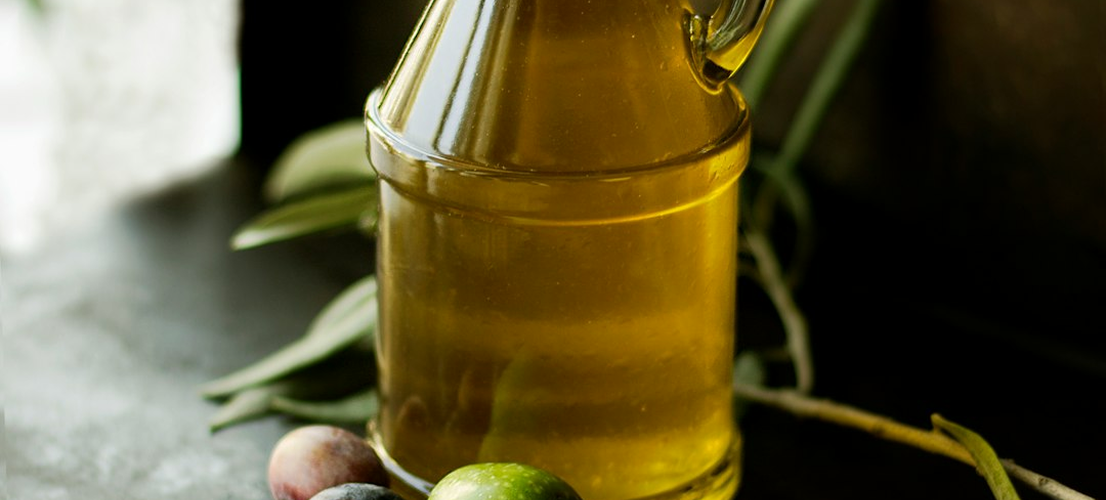
For centuries, olive oil–based Castile soap has been part of everyday life across the Mediterranean — valued not for novelty, but for reliability. Its formulation was straightforward, its use versatile, and its role quietly essential.
Today, as modern homes fill with increasingly specialized products — one for hands, another for counters, another for floors — researchers across disciplines have begun revisiting a simple question: What happens when we return to simpler formulations?
Castile soap has re-entered this conversation not as a trend, but as a subject of renewed scientific and environmental interest.
Simplicity and Skin Sensitivity
Dermatology researchers have long examined how ingredient complexity affects skin tolerance. In recent years, several studies and clinical observations have explored the impact of using minimal-formulation soaps in households where sensitive skin is a concern.
What these observations suggest is not that one product is a cure-all, but that simpler formulations — with fewer additives and less fragrance — are often better tolerated, particularly for individuals prone to irritation. Castile soap’s traditional composition, typically limited to saponified oils and water, aligns closely with this principle of restraint.
Rather than masking performance with additives, its effectiveness comes from structure and method — a reminder that gentle does not mean ineffective.
A Broader View of the Home
Environmental scientists have also examined what happens when households reduce the number of products they rely on. Studies focused on concentrated, multi-use soap systems highlight potential reductions in packaging waste and a simpler downstream impact on wastewater systems.
Castile soap is frequently noted in this context because it biodegrades readily and functions across a wide range of household applications when properly diluted. The implication is not elimination of modern tools, but a more deliberate approach to what we introduce into our homes and waterways.
Simplicity, in this sense, becomes a systems-level decision rather than an aesthetic one.
Indoor Environments and Everyday Exposure
As people spend more time indoors, attention has turned toward the substances that linger in air and on surfaces. Researchers studying indoor environments often emphasize reducing unnecessary fragrance compounds and volatile components where possible.
Castile soap’s lack of synthetic fragrance and solvents has placed it within a broader discussion about minimizing background exposure in daily life — especially in shared spaces like kitchens and laundry rooms. Again, the takeaway is not prescription, but perspective: less complexity can mean fewer variables.
What the Research Really Points To
Across fields — dermatology, environmental science, indoor air studies — a consistent theme appears: effectiveness does not require excess.
Long before laboratories and journals, early soap makers understood this intuitively. Olive oil, water, and patience were enough. Modern research doesn’t replace that knowledge; it contextualizes it.
As one environmental research group summarized in its findings, sustainable everyday care often relies less on chemical sophistication and more on understanding fundamentals — mechanical action, appropriate dilution, and thoughtful use.
A Return to Rational Care
Castile soap’s resurgence is not about looking backward. It’s about recognizing that some ideas endure because they were well designed in the first place.
At SABOŪN, we see this not as a rejection of modern life, but as an invitation to simplify it — to choose products that work effectively, integrate naturally into daily routines, and respect both tradition and context.
Sometimes progress isn’t louder or more complex.
Sometimes it’s simply more considered.